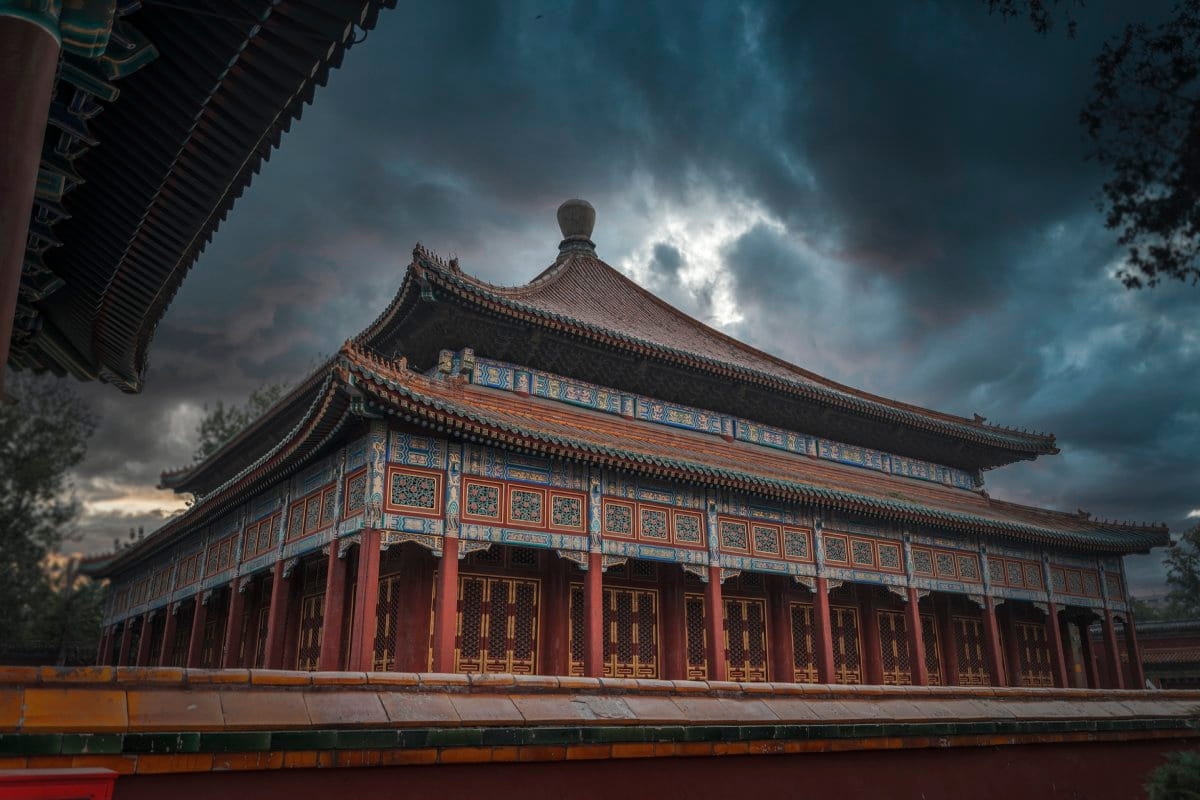
When you stand before the towering Meridian Gate, the first thing that strikes you isn't just the sheer scale of the structure, but the overwhelming sense of order. The Forbidden City is not merely a collection of wooden halls and stone courtyards; it is a physical manifestation of Chinese philosophy, where every pillar, roofline, and paving stone plays a role in a grand, cosmic design. For the ancient architects who drafted these plans over 600 years ago, beauty was synonymous with balance. The layout of this massive complex tells a story of stability, hierarchy, and the Emperor’s role as the pivot between Heaven and Earth.
Walking through these vast courtyards, you are tracing a line that was once believed to be the center of the known world. The architecture dictates your movement, guiding you along a specific path that emphasizes authority and harmony. To truly appreciate this masterpiece, one must look beyond the red walls and golden tiles to understand the invisible grid that holds it all together. Before diving deep into the structural details, those planning a trip should explore our guide on Forbidden City architecture to grasp the foundational elements that make this site unique.
The Central Axis: The Backbone of Beijing
The most defining feature of the Forbidden City’s symmetry is the Central Axis. This invisible line runs north to south, bisecting the city of Beijing and serving as the spine upon which the imperial palace rests. In traditional Chinese cosmology, the Emperor was the Son of Heaven, and his seat of power had to be perfectly aligned with the celestial pole. Consequently, all the most important buildings—the halls of power and the imperial residence—are arranged precisely along this central line.
As you move from the south to the north, the elevation of the land rises subtly, elevating the Emperor physically and symbolically above his subjects. This linear progression creates a powerful psychological effect on the visitor. The deeper you venture into the complex, the more intimate and sacred the spaces become, yet they never deviate from that central organizing principle. For visitors interested in the evolution of this layout, our history of the Forbidden City offers fascinating insights into how different dynasties maintained this rigid alignment.
The axis is not just a line on a map; it is a viewing corridor. Standing in the center of the Hall of Supreme Harmony’s courtyard, the view to the north and south is unobstructed, creating a vista of endless gates and doors opening one after another. This was designed to impress foreign envoys and officials with the depth and solemnity of the imperial court.
Bilateral Symmetry: The Theory of Yin and Yang
While the Central Axis provides the spine, the flesh and blood of the palace are arranged through bilateral symmetry. If you were to fold the map of the Forbidden City in half along the central line, the eastern and western sides would mirror each other almost perfectly. This reflects the concept of duality found in the *I Ching* (Book of Changes)—the balance of Yin and Yang. However, this symmetry is functional as well as aesthetic.
The buildings flanking the central axis are arranged in pairs. If there is a gate on the east, there is a corresponding gate on the west. This arrangement served the strict bureaucratic hierarchy of the imperial court. Generally, the eastern side was associated with the rising sun and civil administration (Yang), while the western side was linked to military affairs and the setting sun (Yin). This balance ensured that neither the pen nor the sword dominated the governance of the empire; both were necessary, and both had their place.
To help visualize this complex arrangement, here is a breakdown of how the symmetry functions across different zones of the palace:
| Zone | Architectural Focus | Symbolic Meaning |
| Central Axis | Hall of Supreme Harmony, Palace of Heavenly Purity | Supreme Power, The Emperor, Connection to Heaven |
| Eastern Wing | Literary Halls, Prince Residences | Civil Affairs, Growth, The Rising Sun (Yang) |
| Western Wing | Military Halls, Concubine Residences | Military Affairs, Introspection, The Setting Sun (Yin) |
| The Rear | Imperial Garden | Relaxation, Nature, Breaking the Rigid Grid |
Exploring these side halls often requires more time than a standard rush tour allows. We recommend looking at our curated itineraries to ensure you allocate enough time to wander off the main path and see these symmetrical pairings firsthand. The contrast between the bustling central courtyards and the quieter, mirrored side passages is profound.
Harmony Through Numerology and Design
The obsession with balance extends to the smallest details, governed heavily by numerology. The number nine, representing the Emperor and eternity, is omnipresent. You will find it in the arrangement of door studs, the number of mythical beasts on the roof ridges, and the layout of the rooms. This numerical symmetry reinforces the architectural balance. A building with nine bays (the space between columns) is considered the height of prestige, reserved for the most important structures on the axis.
Roof designs also play a critical role in this visual harmony. The sweeping curves of the yellow glazed tile roofs are not just decorative; they are designed to allow light to penetrate in winter while shading the interior in summer. The ridges often feature an odd number of mythical beasts, always balanced on either side of the roofline to ward off evil spirits and fire. Capturing these intricate details requires the right lighting and angle; photographers should consult our photography guide to find the best spots for capturing these symmetrical rooflines against the Beijing sky.
Let's take a closer look at some architectural elements and their symmetrical significance:
- Dougong (斗拱): These interlocking wooden brackets, crucial for supporting the roof, are meticulously arranged in symmetrical patterns, showcasing both structural ingenuity and visual balance.
- Pailou (牌樓): These ornamental archways, often found at the entrances of important areas, exhibit perfect bilateral symmetry, emphasizing the importance of the space they guard.
The Exception that Proves the Rule: The Imperial Garden
After walking through court after court of rigid, awe-inspiring symmetry, visitors eventually reach the northern end of the complex: the Imperial Garden. Here, the strict rules of balance are intentionally relaxed. While the garden still maintains a general north-south orientation, the paths wind, the trees are allowed to grow in natural, gnarled shapes, and the rockeries are asymmetrical.
- Contrast: The garden represents the natural world, which is organic and flowing, contrasting with the human-made order of the courts.
- Relaxation: This was the Emperor's retreat. The break in symmetry allowed for a mental break from the rigid protocols of the court.
- Taoist Influence: While the courts are Confucian (order, hierarchy), the garden is Taoist (nature, flow).
This deliberate disruption of symmetry is actually the final piece of the puzzle. It suggests that true balance includes a space for organic growth and relaxation. It is a harmonious conclusion to the rigid journey through the palace.
Experiencing the Architecture Today
To truly understand the impact of this architectural balance, timing your visit is crucial. The vast courtyards can feel chaotic when filled with thousands of visitors, which can disrupt the sense of serenity the architects intended. Checking the best time to visit can help you avoid the peak crowds. Early mornings or late afternoons often provide the long shadows that accentuate the geometric lines of the pavement and the buildings.
Furthermore, logistics play a huge role in how much you can appreciate the site. The complex is massive—covering 180 acres—and walking the entire central axis plus the side wings is physically demanding. Make sure you know how to get there efficiently so you arrive fresh. Entering through the Meridian Gate (South) and exiting through the Gate of Divine Prowess (North) is the mandatory route, which fortunately forces you to experience the unfolding symmetry exactly as the emperors intended.
Planning Your Architectural Tour: A Visitor's Guide
To make the most of your visit and fully appreciate the architectural symmetry, consider these practical tips:
- Wear Comfortable Shoes: You'll be doing a lot of walking!
- Bring Water and Snacks: The Forbidden City is vast, and refreshments inside can be expensive.
- Download a Map: While signage is available, a map will help you navigate the complex and identify key symmetrical features.
- Consider a Guided Tour: A knowledgeable guide can provide insights into the symbolism and history behind the architecture.
Architectural Glossary
To enhance your understanding of the Forbidden City's architecture, here are a few key terms:
- Bay (間): The space between columns, a fundamental unit of measurement in traditional Chinese architecture.
- Dougong (斗拱): Interlocking wooden brackets that support the roof, distributing weight and adding decorative detail.
- Pailou (牌樓): An ornamental archway, often marking the entrance to an important area.
Planning Your Architectural Tour
Because the daily visitor numbers are strictly capped to preserve the site, securing your entry in advance is non-negotiable. You can view options for entry on our tickets page. For those who want to dive deeper into the symbolism of the layout, booking a guide or an audio tour is highly recommended. They can point out the subtle deviations in symmetry that the untrained eye might miss.
Once you exit the Forbidden City to the north, don't rush away. Cross the street to Jingshan Park. Climbing the hill there offers the only vantage point where you can see the entire layout from above. From that height, the Art of Balance becomes undeniably clear: a sea of golden roofs rippling out in perfect order from the center, a testament to a civilization that sought to write its values in stone. For more ideas on what to do after your tour, check our guide to nearby attractions.
The Forbidden City remains one of the world's most perfect examples of architectural symmetry. It is a place where design serves power, and where the placement of every stone is a prayer for eternal stability. Before you head to the palace, ensure you check the current opening hours, as the museum is closed on Mondays (except for statutory holidays).