Book Tickets
Master Plan

The Central Axis

The entire Forbidden City is built along a central north-south axis, which was once considered the backbone of the entire city of Beijing. This axis represented the path of the Emperor, and the most important buildings are situated directly upon it.

Symmetry is the governing principle. To the east and west of this "imperial spine" are identical rows of secondary buildings, creating a balanced and harmonious layout that reflects the Chinese philosophy of balance between Yin and Yang.

The main axis of the Forbidden City
Building Excellence

Traditional Wooden Construction

Unlike Western stone cathedrals, the Forbidden City is primarily a masterpiece of wooden engineering. The structures rely on a sophisticated system of post-and-beam construction and dougong (bracket sets).

The Power of Dougong

Dougong brackets are complex interlocking wooden structures that connect columns to the roof beams. They allow for massive, heavy roofs with wide overhangs while providing the flexibility necessary to withstand earthquakes. Remarkably, many of these structures do not use a single nail, relying entirely on precise joinery.

The Raised Terrace

The most important halls are built upon three-tiered white marble terraces. This not only provided flood protection but also elevated the Emperor physical and symbolic status, making the structures appear to float above the courtyards.

Imperial Roofs

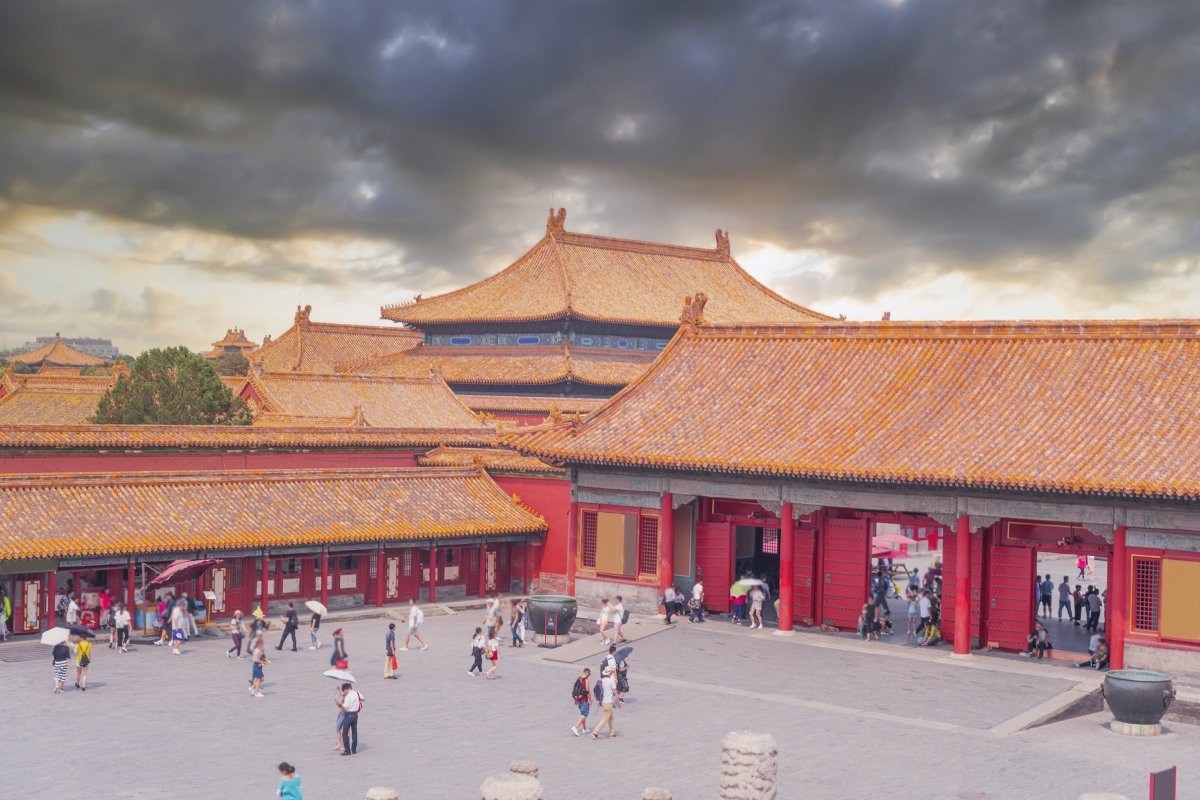
Yellow glazed tiles were reserved exclusively for the Emperor. The number of figurines on the roof ridges indicates the rank of the building.

Golden Pavements

The floors of the main halls are paved with "gold bricks"—specialized clay tiles that took months to fire and produced a metallic ring when struck.

Red Walls

The deep crimson walls symbolize wealth and good fortune, while providing a stunning contrast to the white marble and golden roofs.

Must-See Structures

Architectural Highlights

The Meridian Gate

The massive U-shaped southern entrance, featuring the "Five Phoenix Towers" which housed the imperial bells and drums.

Hall of Supreme Harmony

The largest and highest-ranking building in the palace, used for grand ceremonies and imperial coronations.

Nine-Dragon Wall

A multi-colored screen wall featuring nine dynamic dragons, a masterpiece of glazed tile craftsmanship.

Explore Further

Discover More