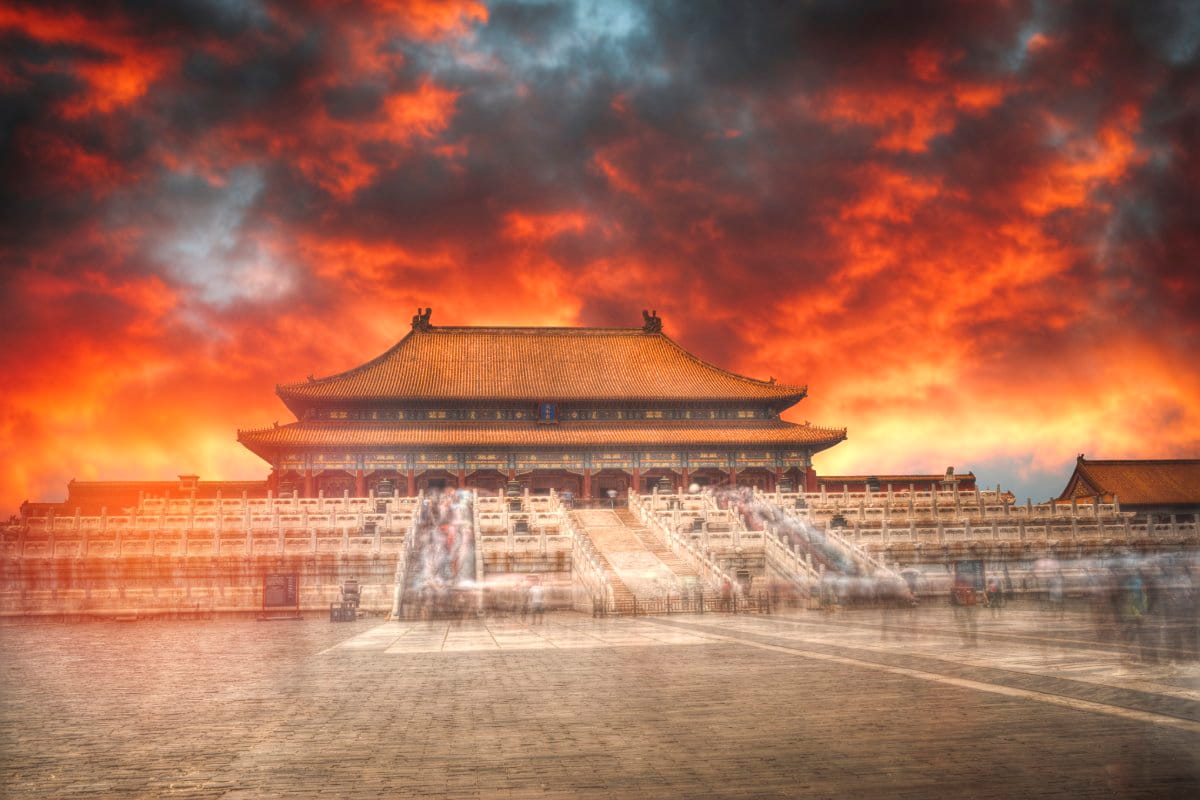
Walking through the Meridian Gate today, amidst the bustle of modern Beijing, one can still feel the heavy, silent weight of history. The Forbidden City is not merely a collection of wooden halls and stone courtyards; it is a sprawling stage where the drama of China’s imperial past played out for over 500 years. To understand this architectural marvel is to understand the very soul of the Middle Kingdom, a narrative woven with threads of absolute power, artistic brilliance, and tragic decline. As we stand here in January 2026, the crimson walls still echo with the whispers of emperors, eunuchs, and concubines who once called this isolated world their home.
The Vision of Yongle: Birth of the Purple Forbidden City
The story begins in the early 15th century with the Ming Dynasty’s third emperor, Yongle (Zhu Di). Seeking to consolidate his power and move away from the influence of the former capital in Nanjing, Yongle ordered the construction of a new imperial residence in Beijing. Between 1406 and 1420, a colossal workforce numbering over a million laborers and artisans toiled to create what would become the world’s largest palace complex.
Every beam of precious nanmu wood and every block of marble was transported over vast distances, a testament to the organizational might of the Ming. The layout was strictly dictated by traditional feng shui and hierarchy. If you look closely at the design, you will see how it reflects the emperor's role as the Son of Heaven, serving as the pivot between the celestial and terrestrial realms. To truly appreciate the symbolic layout that Yongle established, you must delve into the palace's Architecture, where cosmic order dictates the placement of every hall. (Tip: Consider finding a detailed architectural map of the Forbidden City to further illustrate this section.)
The Ming Dynasty: Isolation and Turmoil
For the remainder of the Ming Dynasty, the Forbidden City was a gilded cage. Emperors rarely left the complex, governing a vast empire from behind high walls. This era saw the rise of the eunuch class, servants who wielded immense political power, often manipulating the emperors they served. The palace witnessed fires, lightning strikes interpreted as bad omens, and political intrigues that shook the foundations of the dynasty.
One of the most dramatic events was the Tumu Crisis in 1449, where an emperor was captured by Mongols, sending the court within the Forbidden City into panic. Yet, despite the internal rot that eventually set in, the Ming era established the cultural and ceremonial protocols that would define the palace. For a detailed timeline of these events, our History page offers a chronological deep dive.
The Qing Takeover: A New Dynasty, A New Look
In 1644, the Ming Dynasty fell, not to foreign invaders initially, but to a peasant rebellion led by Li Zicheng, who briefly occupied the palace. However, it was the Manchus from the north who swept in, established the Qing Dynasty, and claimed the Forbidden City as their own. Rather than destroying the palace of the conquered Han Chinese, the Qing emperors adopted it, blending their Manchu heritage with existing traditions.
The Qing era, particularly under the reigns of Emperors Kangxi and Qianlong, marked a golden age of stability and cultural expansion. They renovated the interiors, adding elaborate decorations and integrating Tibetan Buddhist elements. Emperor Qianlong, a voracious patron of the arts, filled the halls with calligraphy, paintings, and jade. To see the specific areas where these emperors lived and worked, you can follow one of our curated Itineraries designed to highlight these dynastic differences.
The Qing emperors, keen to assert their legitimacy, also made subtle but significant alterations to the Forbidden City's layout and function. For instance, the Hall of Mental Cultivation (Yangxin Dian) became the de facto residence and office of the Qing emperors, moving away from the Ming's emphasis on the Hall of Supreme Harmony for daily affairs. The Qianlong Emperor also added the Garden of Compassion and Tranquility (Cining Garden) for his mother, showcasing filial piety, a core Confucian value embraced by the Qing. Furthermore, the Qing emperors incorporated shamanistic rituals into palace life, reflecting their Manchu heritage. These rituals, though less visible to the casual observer, were crucial in maintaining the spiritual well-being of the dynasty. (Tip: Adding a photo of the Hall of Mental Cultivation or the Cining Garden would enrich this section.)
Key Emperors and Their Legacy
Understanding the personalities behind the throne helps bring the stone structures to life. Here is a look at pivotal figures who shaped the palace:
| Emperor/Figure | Dynasty | Major Contribution/Event |
| Emperor Yongle | Ming | Initiated the construction of the Forbidden City and moved the capital to Beijing. |
| Emperor Jiajing | Ming | Expanded the complex and renovated several temples; known for his obsession with Daoist alchemy. |
| Emperor Kangxi | Qing | Solidified Qing rule; opened the palace to Jesuit missionaries who brought Western science and art. |
| Emperor Qianlong | Qing | The height of imperial power; amassed a massive collection of art and expanded the palace gardens. |
| Empress Dowager Cixi | Qing | Effectively ruled for 47 years; renovated the Summer Palace but maintained the Forbidden City as the seat of power. |
The Twilight of the Empire
The 19th and early 20th centuries brought shadows to the Forbidden City. The later Qing Dynasty was marked by stagnation and external pressure. The formidable Empress Dowager Cixi is perhaps the most defining figure of this era. Ruling from behind the curtain, she navigated the dynasty through the Opium Wars and the Boxer Rebellion. It was during this time that the Forbidden City suffered looting by foreign powers in 1900, a scar on its history that took decades to heal.
The story concludes with Puyi, the Last Emperor. Ascending the throne as a toddler, he lived a surreal life trapped inside the palace walls even after the Republic of China was established in 1912. His expulsion in 1924 marked the final end of the imperial era. The transition from a forbidden imperial residence to a public museum in 1925 was a monumental shift, allowing commoners to finally step into the spaces previously reserved for the divine.
Experiencing the History Today
Visiting the Forbidden City today is about more than just sightseeing; it is an act of witnessing history. The sheer scale of the complex can be overwhelming, so planning is essential. Because the site limits the number of daily visitors to preserve its integrity, we strongly recommend securing your entry in advance. You can check availability and options on our Tickets page.
To truly capture the atmosphere of the ancient dynasties, the timing of your visit matters. The lighting during early mornings or late afternoons casts long shadows that evoke the mystery of the past. Consult our Best Time to Visit guide to avoid the densest crowds and catch the most evocative light. Speaking of capturing moments, the intricate details of the roof beasts and the vastness of the courtyards are a photographer's dream. Our Photography Guide will help you find the best angles to showcase the contrast between the ancient structures and the open sky.
Practical Tips for Historical Explorers
When you visit, keep in mind that the complex is vast—covering 180 acres. Here are a few tips to enhance your historical journey:
- Enter through the Meridian Gate: This was the main entrance for the Emperor. Entering here sets the right historical tone.
- Visit the Treasure Gallery: Located in the northeast corner, this area houses artifacts that showcase the immense wealth of the Qing court.
- Check the Schedule: The museum is usually closed on Mondays. Always verify the current Opening Hours before you travel.
- Plan Your Route: Don't just walk the central axis. The eastern and western wings hold the living quarters where the daily dramas of the concubines and princes took place.
Getting to the palace is straightforward, as it sits in the very heart of Beijing. Whether you are taking the subway or a taxi, our How to Get There guide provides detailed instructions to ensure you arrive at the correct gate without hassle. Once you have soaked in the history of the Forbidden City, remember that the surrounding area is also rich with heritage. Jingshan Park, located directly to the north, offers a panoramic view of the palace that allows you to grasp its full scale. Explore more options on our Nearby Attractions page.
A Timeless Legacy
The Forbidden City stands as a resilient witness to the rise and fall of dynasties. It has survived fires, wars, and revolutions. As you walk its stone pavements, you are walking in the footsteps of emperors who once believed they ruled the entire world. It is a place where the echoes of the past are deafening, waiting for those willing to listen. Unraveling this tapestry takes time, but the reward is a profound connection to one of the greatest civilizations in human history.